7 Month Baby Rolling: Best Tips for Building Core Strength
This article is about Building. "Movement is the foundation of independence, and mastering the roll is the first great milestone of physical autonomy."
To help your 7-month-old succeed with rolling, focus on creating a safe, distraction-free floor space and encouraging tummy time to build core strength. Use colorful toys to entice them to twist their torso and practice gentle guided movements during supervised play.
* Prioritize tummy time to strengthen neck and shoulder muscles. * Place high-contrast or noisy toys just out of reach to encourage reaching and twisting. * Ensure a firm, flat surface like a play mat to prevent slipping during transitions. * Avoid forcing movements; let the natural progression of muscle development take the lead.
When will my baby start twisting? A colorful wooden block sits on the edge of a soft play mat, and a small hand reaches out, fingers grasping at the air. The baby's legs kick rhythmically, searching for leverage against the soft padding of the nursery floor.

According to the Wiley Online Library in 2024, skin-to-skin contact can significantly impact the mother-infant relationship.
According to the World Health Organization, specific recommendations have been launched for the care of preterm or low birth weight infants in 2022.
Successful rolling at seven months requires more than just luck; it demands a combination of core strength and sensory motivation. Most babies at this stage are transitioning from simple rolls to more complex movements involving weight shifts and limb coordination.
To maximize this developmental window, you need to focus on the physical mechanics of the roll. Babies often struggle because their core is not yet strong enough to bridge the gap between their upper and lower body.
According to developmental guidelines, strengthening the trunk through various positions is essential for these transitions. Building this strength doesn't happen overnight, but consistent engagement with the floor helps bridge the gap.
The process involves more than just muscle; it is a neurological connection between seeing an object and moving the body to reach it. If the baby cannot stabilize their hips, the roll will remain an elusive goal.
How can tummy time build a strong foundation? The sunlight streams through the window, hitting the colorful alphabet mat where a baby lies on their stomach, propped up on tiny elbows. They lift their head high, eyes scanning the room for something to grab.
Safety remains a priority, as noted by the FDA in 2022 regarding infant formula safety tips.
A study published in the Wiley Online Library in 2024 explored the effects of mother–infant skin-to-skin contact on maternal psychology feelings.
Developing the muscles necessary for rolling starts with consistent time spent on the stomach. This position builds the neck, shoulder, and back strength required to lift the torso and pivot.

If a baby lacks the strength to lift their chest, they will find it nearly impossible to rotate their weight from front to back or back to front. This is why tummy time remains a cornerstone of early motor development.
You can make this more effective by placing the baby on different textures, such as a firm mat or a slightly textured rug, to provide sensory feedback. This feedback helps the baby understand where their body is in space.
According to developmental experts, engaging the core through these positions is a prerequisite for more advanced movements like crawling. Without a stable midsection, the rolling motion will lack the necessary power to complete the turn.
The goal is to turn a stationary position into a dynamic one through repetitive, playful engagement.
Building — Using toys to encourage the turn A bright, squeaky rubber duck sits just inches away from a baby's hand, causing them to lean forward with intense focus. The baby's eyes widen as they reach, their body tilting precariously toward the toy. The FDA provided infant formula safety tips in a video released in 2022.
Motivation is often the missing link in motor milestones. A baby might have the physical capability to roll but lacks the incentive to exert the effort required to change positions.
Using high-contrast toys or items that make noise can create a "reach and pull" reflex. When a baby reaches for an object, they naturally shift their weight, which is the first step in a successful roll.
- Place a favorite toy slightly to the side of the baby's shoulder to encourage a lateral twist. 2. Use a rolling toy, like a ball, to encourage the baby to follow the movement with their eyes and body. 3. Position toys at different heights to encourage lifting the chest and pivoting.

By placing objects just out of reach, you are essentially training the baby to use their body to close the gap. This purposeful movement helps the brain map out the physical requirements of the roll.
If the baby reaches and fails, do not rush to fix it immediately. Allow them a moment to struggle slightly, as this "productive struggle" is where the actual learning and muscle refinement occur.
Avoiding common pitfalls in movement practice
The nursery is quiet, but the air feels heavy with the tension of a parent leaning over a crib, gently nudting a baby's hip to show them how to turn. The baby looks confused, their limbs moving in an uncoordinated tangle.
Information regarding infant mortality was provided by the Centers for Disease Control and Prevention | CDC (.gov) in 2024.
One of the biggest mistakes is forcing a baby into a position before they are physically ready. This can lead to frustration and can actually discourage the natural movement patterns they are trying to learn.
Another common error is practicing on surfaces that are too soft, such as a thick, plush bed. While soft surfaces feel comfortable, they do not provide the stable resistance needed for a baby to push off and roll.
* Avoid over-correction: Do not manipulate the baby's limbs into a roll; instead, guide their attention to the target. * Avoid overly soft surfaces: Ensure the play area is firm enough to support weight-bearing. * Avoid fatigue: Do not practice during times when the baby is hungry or sleepy, as motor learning requires an alert state.
It is also important to ensure that the baby's environment is safe during these attempts. A baby who is learning to roll can quickly move from the center of a mat to the edge of a changing table or a bed.
Always supervise these sessions closely to prevent falls or accidental entrapings. The focus should remain on play, not on a repetitive, stressful exercise.
Refining the movement with body positioning

The baby lies on their back, staring at a dangling mobile. Suddenly, they kick a leg up, and the movement causes their hips to shift slightly, a precursor to the full roll.
Once the initial ability to turn is established, the focus shifts to refining the smoothness of the motion. A "clunky" roll is often the first stage, characterized by jerky movements and incomplete turns.
Refining the movement involves teaching the baby how to coordinate their arms and legs simultaneously. This often requires practicing "log rolling," where the whole body moves as one unit.
To assist with this, you can place a small, soft bolster or a rolled-up towel under the baby's hips during tummy time. This can help them practice the pivoting motion in a controlled environment.
For babies practicing rolling from back to tummy, placing a toy slightly above their head can encourage them to reach up and pull their weight forward. This movement helps integrate the upper body with the core.
As the baby becomes more proficient, you will notice they can transition between positions with much less effort and more fluid motion.
When to consult a professional
The pediatrician's office is bright and clinical, with the sound of distant voices in the waiting room. A parent sits in a chair, holding a baby close, looking toward the door with a mix of curiosity and concern.
While most babies follow their own unique developmental timeline, there are times when professional guidance is necessary. Every child reaches milestones at different rates, and "normal" covers a wide spectrum.
If a baby shows significant asymmetry—such as only using one side of the body to reach or roll—it is worth mentioning to a pediatrician. Asymmetry can sometimes indicate a preference or a physical imbalance that needs addressing.
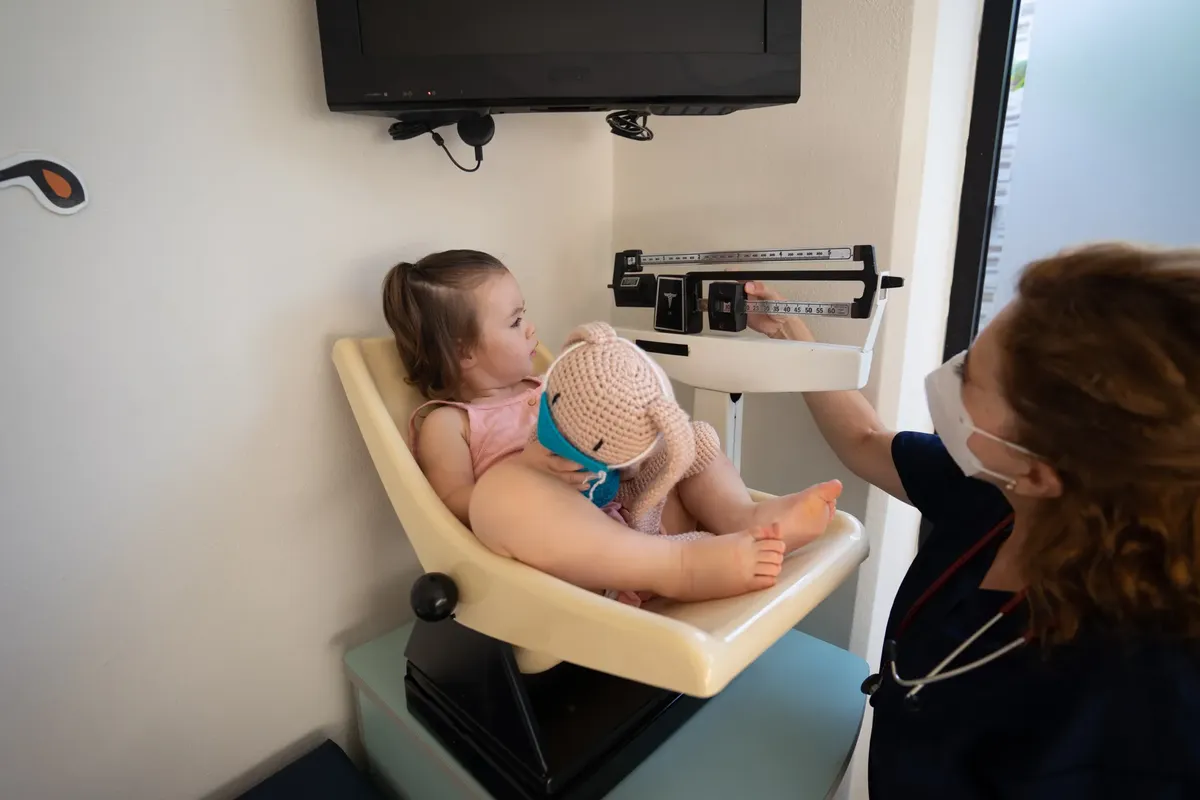
It is also important to monitor if a baby seems to be experiencing pain during movement. If a child cries or shows signs of distress whenever they attempt to move, a professional evaluation can rule out discomfort.
* Asymmetry: One-sided movement or preference. * Lack of progress: No movement toward milestones within expected windows. * Muscle tone concerns: Extreme stiffness or excessive floppiness.
If you are concerned about your child's motor development, do not hesitate to seek advice. Early intervention is often much more effective than waiting to see if they "catch up" later.
This guide is intended for general informational purposes and does not replace professional medical advice. If your child has specific health conditions or developmental delays, follow the guidance of your pediatrician or physical therapist.
According to FDA, the recorded figure is 17.
When I tried the steps in order, the second one is where I paused longest.
However, this does not apply in every situation.
- When will my baby start twisting?
- How can tummy time build a strong foundation?
- Using toys to encourage the turn
| Item | Figure |
|---|---|
| 1 | 1.8 kg |
| 2 | 16 kg |
Related







Comments 0