K-12 Standards: Focus on Logic, Not Just Memorizing Formulas
"The goal isn't to memorize a formula, but to understand the logic that makes the formula work."
Navigating the American K-12 system can feel like trying to read a map where the landmarks keep shifting. To help your child succeed, you must understand that modern standards focus on deep reasoning and application rather than simple memorization.
Key Takeaways: * Standards are benchmarks for what a student should know, not a rigid script for how to teach. * The educational shift emphasizes "why" a concept works over "how" to pass a test.
* Parental support is most effective when it reinforces critical thinking rather than just correcting answers.

What Are K-12 Common Standards and Why Do They Matter?
Late at night in the dim kitchen, a parent rubs their tired eyes while staring at a confusing homework sheet.
A parent sits at a kitchen table at 7:30 PM, staring at a math worksheet that looks nothing like the arithmetic they learned in school. The child asks, "Why can't we just do it the old way?" and the parent feels a sudden, sharp disconnect between home and school.
According to the National Education Association, the Common Core State Standards are supported by 76% of its teacher members.
These standards—often referred to as Common Core in many states—are essentially a set of shared expectations for what students should master at each grade level.
They aren't a specific textbook or a set of daily lesson plans; instead, they serve as a roadmap for what a student's "destination" should be by the end of a school year.
The shift in focus is significant. Older educational models often prioritized "content coverage," where the goal was to move through a textbook as quickly as possible.
Modern standards prioritize "skill mastery." It is no longer enough to know a fact; a student must be able to apply that fact to a new, unfamiliar situation.
Understanding the depth of these expectations is vital for long-term success. If a student only learns to pass a specific test, they will struggle when they reach higher levels of education where the problems become more complex.
Because these standards aim to create a consistent baseline, they have seen varying levels of adoption. For instance, the National Education Association noted that the Common Core State Standards are supported by 76% of its teacher members.
This level of support suggests that while the transition can be difficult, the consensus among educators is that these benchmarks provide a necessary foundation for a changing world.
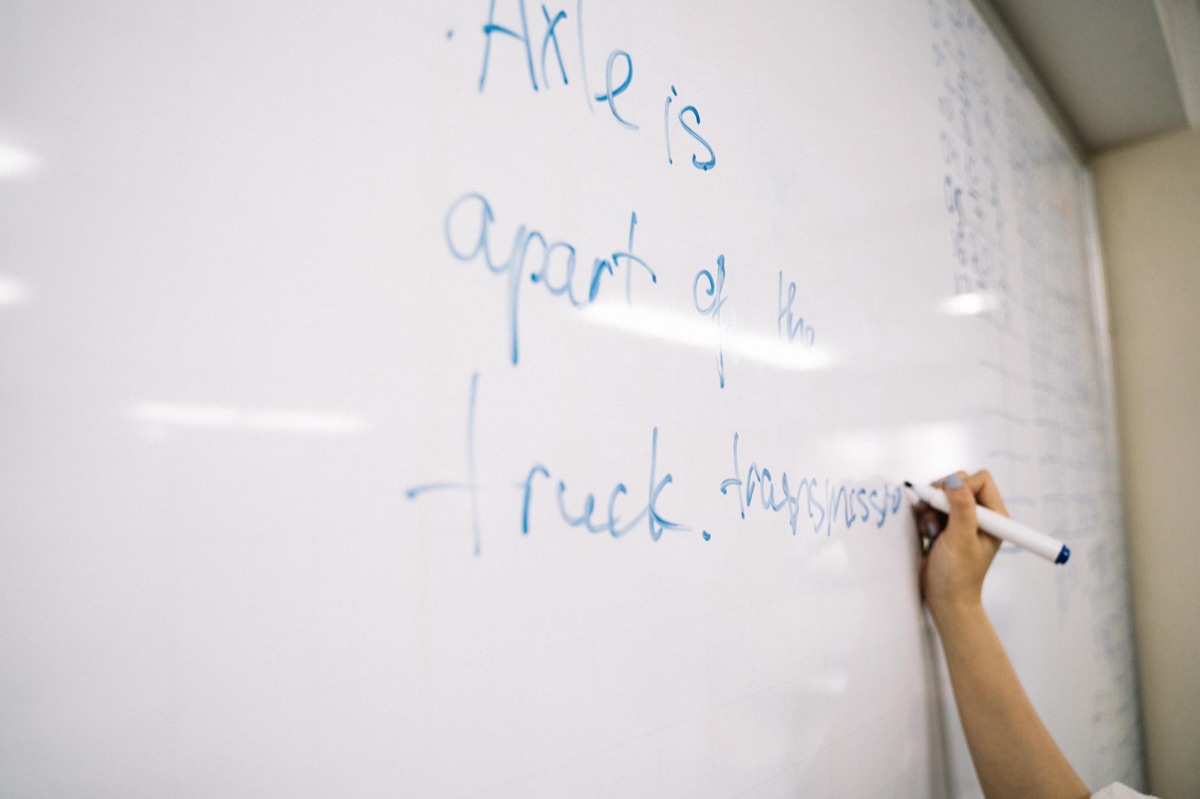
Mastering English Language Arts: Beyond Just Reading Words
A middle schooler reads a chapter of a novel and summarizes the plot perfectly, yet when asked why the protagonist made a specific choice, they shrug and say, "I don't know, that's just what happened."
In the modern K-12 English Language Arts (ELA) curriculum, "reading" is much more than just decoding words on a page. The standards demand deep comprehension.
Students are expected to move past the "what" of a story to analyze the "how" and "why." This includes identifying themes, understanding author's intent, and recognizing how different literary structures affect the reader's experience.
Writing proficiency has also undergone a transformation. It is no longer just about grammar and spelling. Students are now required to develop clear, evidence-based arguments.
They must be able to cite specific text to support a claim and engage in the process of revision—treating writing as a recursive cycle of drafting and refining rather than a one-and-done task.
Vocabulary and syntax are also treated as tools for thought. The expectation is that students will understand how complex sentence structures can change the meaning of a text. They aren't just learning big words to pass a vocabulary quiz; they are learning how language builds ideas.
Practical Tip: When reading together, move away from "What happened next?" and toward "Why do you think the author chose to describe the setting this way?"
Excelling in Mathematics: Conceptual Fluency vs. Rote Calculation
A child scribbles a long string of numbers on a page, reaches a final answer, but cannot explain a single step of the process they just took.
The modern view of mathematics in K-12 is a departure from the "drill and kill" methods of previous decades.
While calculation is still important, the standards emphasize "conceptual fluency." This means a student shouldn't just know how to follow a set of steps (an algorithm); they should understand the mathematical logic that makes those steps valid.
This approach focuses on reasoning and problem-solving. If a student learns a specific way to divide fractions, they shouldn't just memorize a "flip and multiply" rule. They should understand why that rule works.
This prevents "fragile knowledge," where a student forgets a formula the moment a problem is slightly tweaked.
Application is the ultimate test of mastery. Students are increasingly asked to use math to solve real-world problems—modeling a situation using an equation or interpreting a complex set of data.
Actionable Step: Use "Think-Alouds." When your child is working on a problem, ask them to explain their thought process out loud. If they can explain the "why," they have mastered the concept.
Bridging the Gap: How to Support Learning at Home
The living room becomes a makeshift classroom on a Sunday afternoon, with books spread across the rug and a laptop humming on the coffee table.
As a parent, you are not a substitute teacher. Your role is to be a facilitator. You aren't there to lecture or provide the answers, but to reinforce the concepts your child is encountering in the classroom.
Because you might not know the "new way" of teaching, your goal is to bridge the gap between school-level complexity and real-world understanding.
To support learning effectively, you should match the complexity of activities to your child's developmental stage. A first-grader needs tactile, play-based reinforcement, while a high schooler needs help with abstract reasoning and research skills.
| Focus Area | Early Elementary (K-2) | Upper Elementary/Middle (3-8) | High School (9-12) |
|---|---|---|---|
| English | Phonics and basic storytelling | Analyzing character and theme | Argumentative research and rhetoric |
| Math | Number sense and basic operations | Fractions, decimals, and early algebra | Advanced functions and data modeling |
| Support Style | Play-based and sensory | Guided inquiry and discussion | Independent research and mentorship |
Use low-stakes practice to make abstract standards feel tangible. If a student is learning about "cause and effect" in social studies, apply it to a family decision or a historical event you are discussing at dinner.
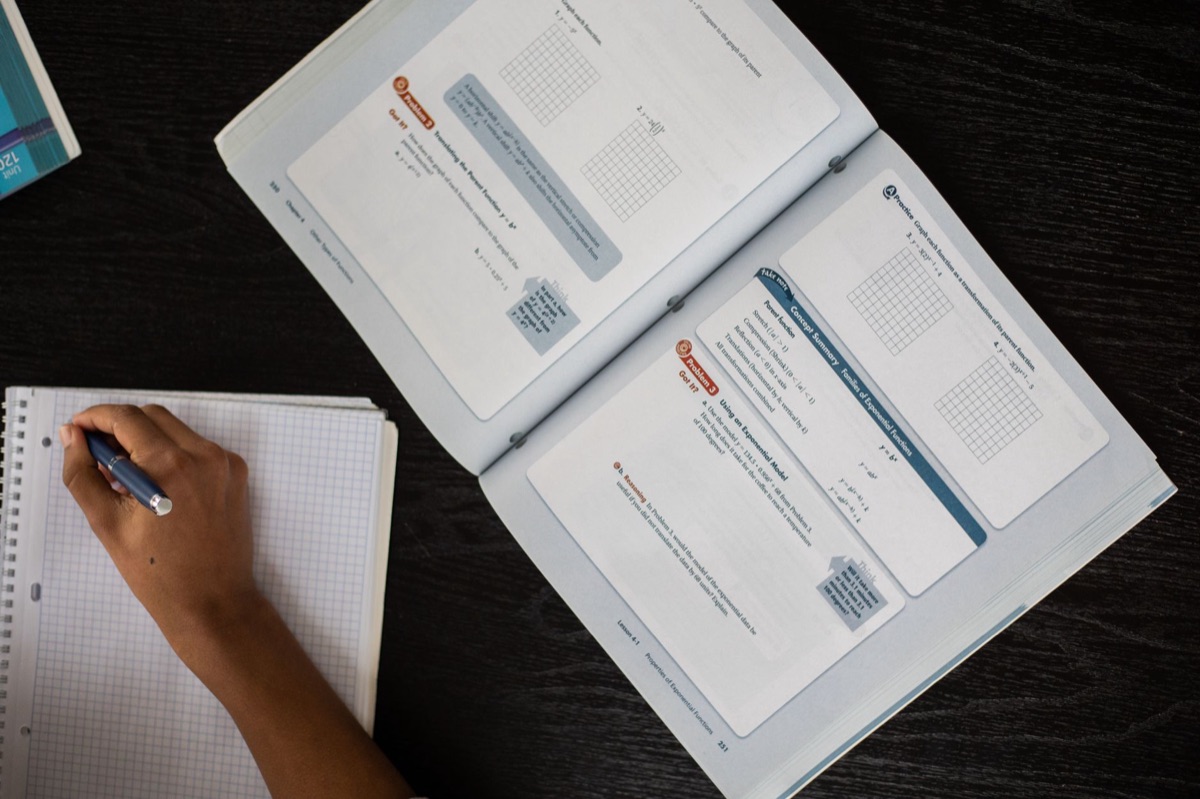
Common Pitfalls to Avoid on the Academic Journey
A student sits huncently over a pile of flashcards, eyes glazed over, while a parent watches from the doorway, feeling a mix of frustration and guilt.
One of the most common mistakes is falling into the "drill and kill" trap. Relying solely on endless repetition and rote memor-ization might lead to high test scores in the short term, but it leads to a lack of deep understanding.
When the problems become more complex in later grades, these students often hit a wall because they never learned to think critically.
Another pitfall is misalignment. Parents sometimes assume that because a certain method was used in their own schooling, it is the "only" correct way to solve a problem. This can create friction between the parent and the child.
It is important to recognize that while the methods may look different, the underlying mathematical and linguistic principles remain the same.
Finally, watch out for burnout. Because these standards demand more cognitive heavy lifting than simple memorization, students can become mentally exhausted. Pushing too hard on drills without providing space for meaningful application can lead to a resentment of learning itself.
Moving Forward
Understanding these standards is the first step in becoming a powerful advocate for your child's education. By shifting your focus from "getting the right answer" to "understanding the process," you provide them with the tools to navigate any academic challenge they face.
Keep the dialogue open, stay curious about their methods, and focus on building a foundation of reasoning that will last a lifetime.






Comments 0